
The Arden Digest — Aug 6, 2026
A curated digest.
Black Forest Labs makes FLUX 3 Video generally available and claims it beats Seedance 2.0
Matthias Bastian · the-decoder.com ↗
Black Forest Labs has made FLUX 3 Video generally available, positioning it as a serious contender in the rapidly evolving AI video generation space. The model produces Full HD clips of up to 20 seconds in length and distinguishes itself with native audio generation and lip-synced dialogue support across more than 14 languages — a capability that sets it apart from many competitors still treating audio as an afterthought. It can also render legible typography directly within generated scenes, a notoriously difficult task for generative video models. According to BFL's own internal Elo-based benchmarking, FLUX 3 Video outperforms both Google's Gemini Omni Flash and ByteDance's Seedance 2.0. While self-reported rankings should always be taken with some skepticism, the breadth of features on offer suggests a genuinely capable release. It marks a significant step forward for Black Forest Labs, the team behind the well-regarded FLUX image generation models.
Autodesk Flow Studio solves AI video’s biggest challenge – creative control
Creative Bloq · creativebloq.com ↗
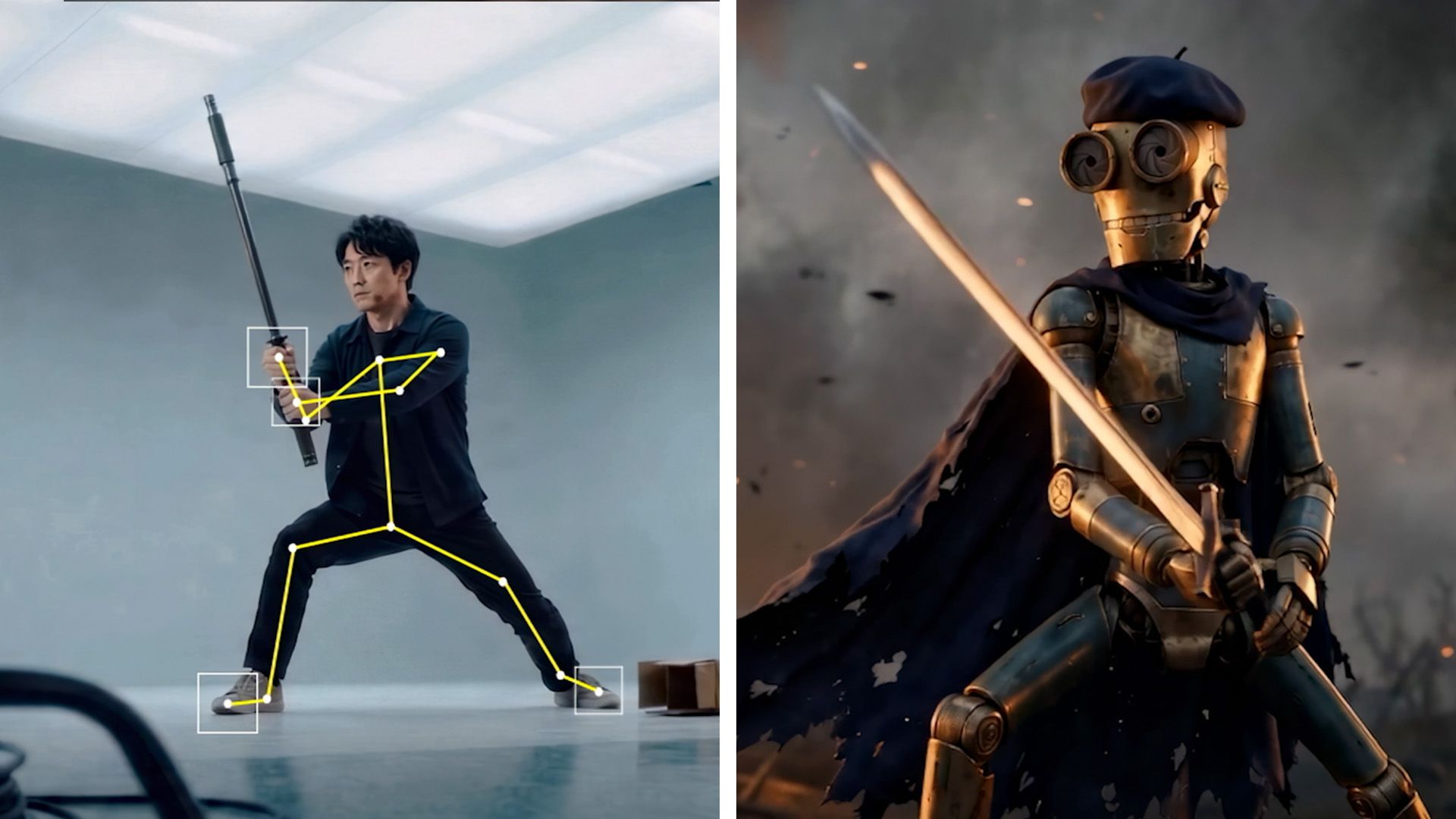
Autodesk is taking aim at one of generative AI video's most persistent frustrations: the near-total lack of creative control. With Flow Studio, the company is betting that professional filmmakers and motion designers need more than a prompt box — they need the ability to direct cameras, maintain consistent characters, and build persistent worlds across shots. The tool is designed to bring the language of traditional cinematography into the AI workflow, letting creators choreograph scenes rather than simply hope the model guesses their intent. Autodesk, with its deep roots in the film and VFX industry through products like Maya and Arnold, is well-positioned to bridge the gap between generative AI and professional production pipelines. The announcement signals a broader industry recognition that raw generative quality, while impressive, is only half the battle. Directability, consistency, and craft remain the frontier.

I can
Creative Bloq · creativebloq.com ↗
The excerpt provided for this item appears to be incomplete, cutting off mid-sentence and leaving the intended subject and argument unfinished. Based on the fragment visible — 'This is the kind of art AI can' — the piece seems to be exploring a distinction between what AI is capable of producing and some contrasting quality, likely human artistic expression or a specific creative limitation. Without the full text, it is not possible to accurately summarize the argument or conclusions being made. The topic of what AI can and cannot do in the realm of art is a rich and actively debated one, touching on questions of authorship, intention, and aesthetic meaning. Readers interested in this subject would be well served by seeking out the full, untruncated version of this piece.
VFX Toolkit for Blender
CGPress · cgpress.org ↗
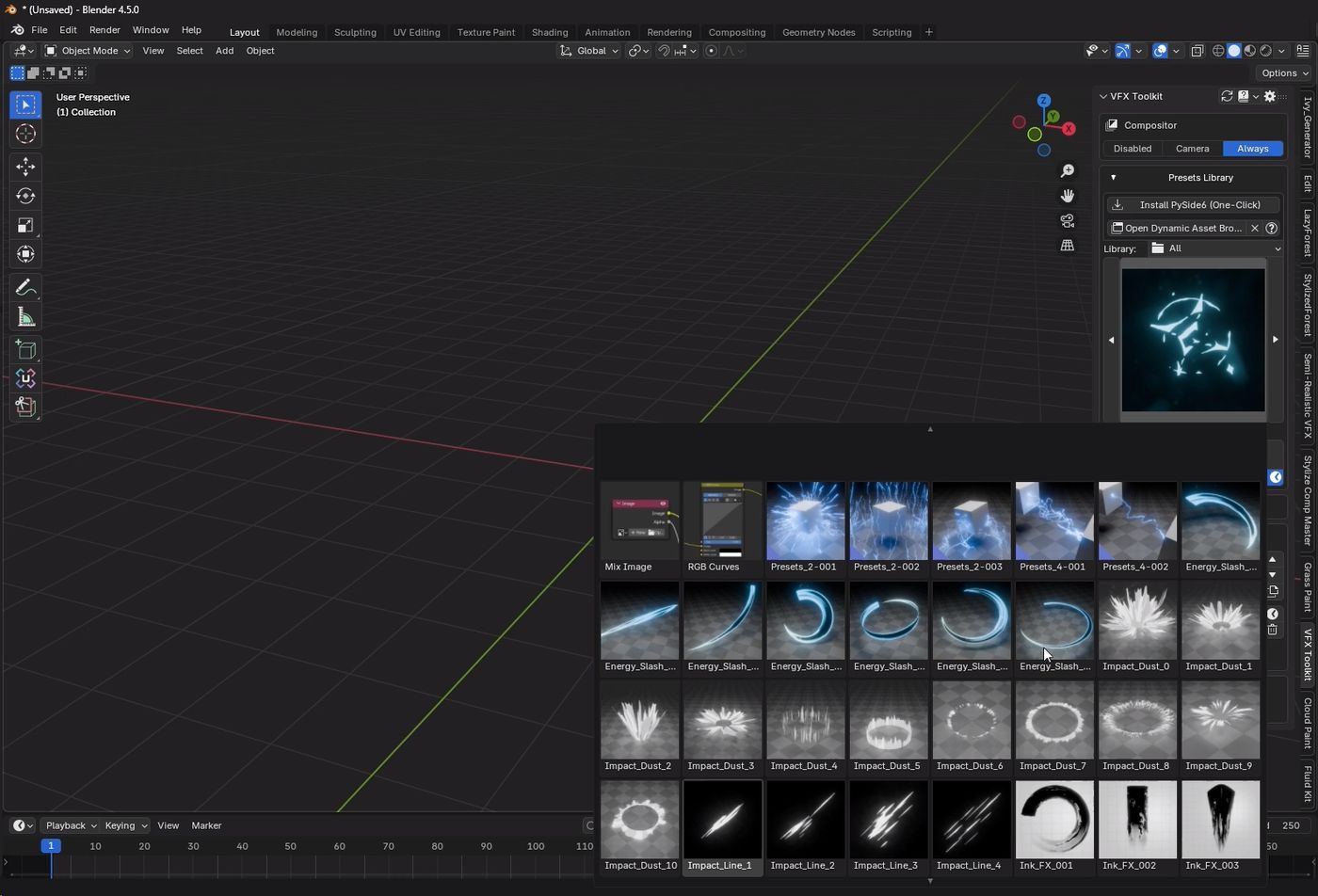
Blender artist and developer Casey Sheep has released a new VFX Toolkit add-on that bundles a wide range of production-ready visual effects tools into a single package for Blender users. The toolkit includes procedural effects, Geometry Nodes generators, custom shaders, hand-drawn animation effects, and compositor-based tools, making it a versatile resource for motion graphics artists and VFX generalists alike. Procedural workflows in Blender have grown significantly in sophistication since the introduction and ongoing development of Geometry Nodes, and add-ons like this help lower the barrier to achieving complex effects without building node networks from scratch. The inclusion of hand-drawn animation effects is a particularly distinctive touch, suggesting the toolkit caters to artists working across both technical and stylized aesthetics. For indie filmmakers, motion designers, and 3D generalists working in Blender, consolidated toolkits like this can meaningfully accelerate production workflows.
Caddis motion design tool released
CGPress · cgpress.org ↗
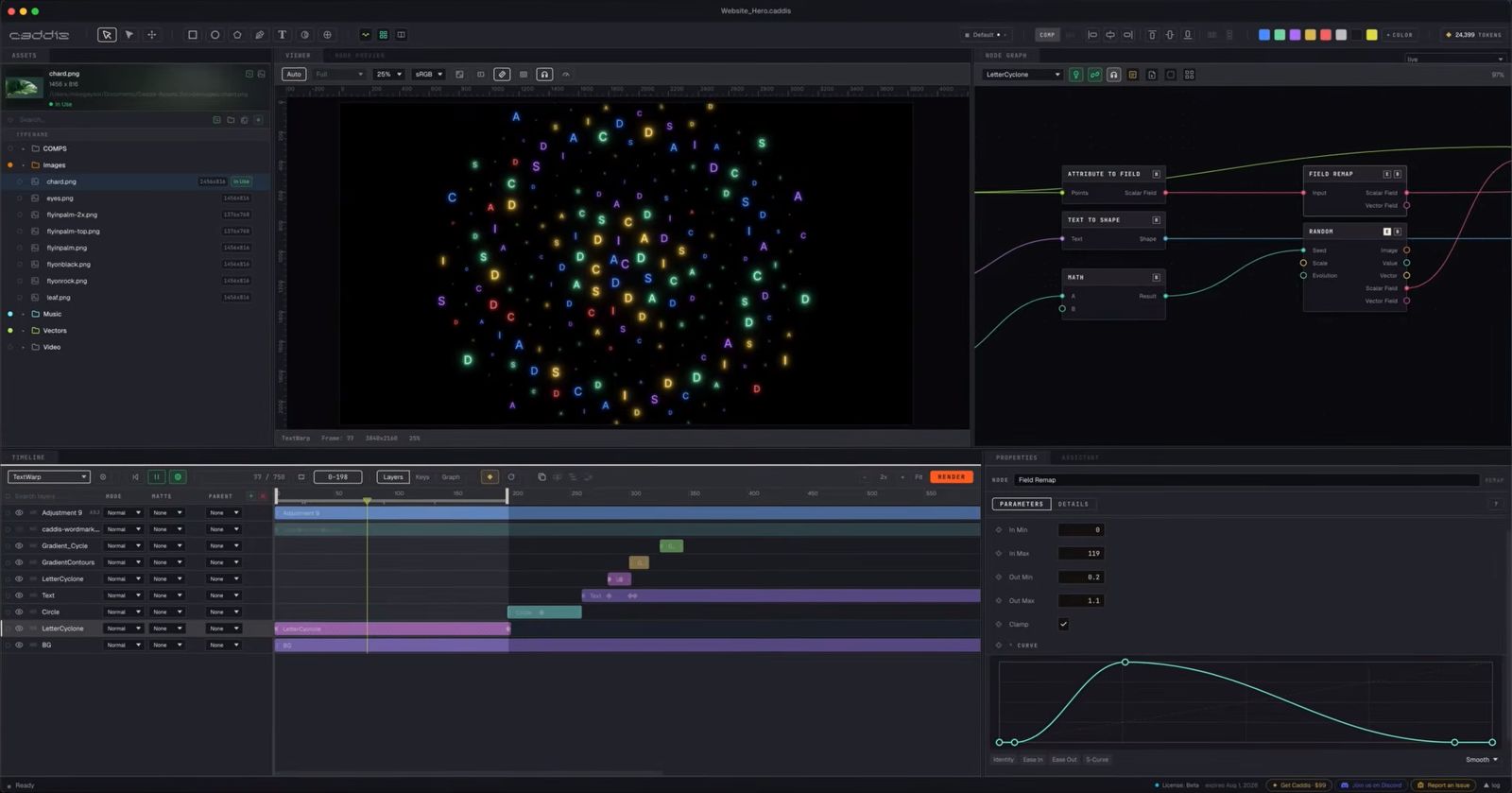
Caddis is a newly released motion design tool that attempts to bridge two historically separate paradigms in animation software: the familiar layer-based timeline interface popularized by Adobe After Effects, and the flexibility of a node graph system for procedural control. Crucially, Caddis embeds a node graph inside every individual layer rather than treating procedural control as a separate, top-level system, giving artists granular procedural power at the per-element level without abandoning the intuitive layer stack workflow they already know. This hybrid approach could appeal strongly to motion designers who find pure node-based tools like Houdini steep in learning curve but feel constrained by the more linear nature of traditional AE-style tools. The motion design software space has seen renewed innovation in recent years, with tools like Cavalry and Rive also challenging After Effects' long dominance. Caddis appears to be staking out a thoughtful middle ground, and its reception among working motion designers will be worth watching.

UV Flex Brings Interactive UV Editing Tools to Blender
80.lv · 80.lv ↗
UV Flex is a new Blender add-on from developer AlbertoFX that brings a suite of interactive editing tools specifically designed for working with UV islands. UV unwrapping and editing has long been considered one of Blender's more technically demanding and less intuitive workflows, making add-ons that streamline the process particularly valuable for character artists, hard-surface modelers, and texture painters. By focusing on interactivity, UV Flex appears aimed at reducing the friction of making precise, real-time adjustments to UV layouts directly within Blender's UV editor. While details on the full feature set are limited, tools that improve UV island manipulation — such as better alignment, distribution, straightening, or interactive transforms — can have an outsized impact on texturing efficiency. For Blender artists who spend significant time preparing assets for game engines or rendering pipelines, a more capable UV editing toolkit is a welcome addition to the ecosystem.

This New 24/7 Society Simulator Is Powered by Thousands of AI NPCs
80.lv · 80.lv ↗
SEED, the ambitious simulation game from developer Klang, takes one of gaming's most intriguing concepts — the persistent, player-driven world of games like EVE Online — and supercharges it with thousands of AI-powered non-player characters. Unlike traditional NPCs that wait passively for player interaction, SEED's AI characters continue to live, work, form relationships, and shape society around the clock, regardless of whether any human players are logged in. This creates a world that genuinely evolves independently, raising fascinating questions about emergent social dynamics, economy, and narrative in games. The EVE Online comparison is apt: that game became legendary not for its scripted content but for the unpredictable complexity that arose from player agency at scale; SEED appears to be attempting something similar, but with AI actors filling the social fabric. The technical and design challenges of sustaining thousands of believable, interacting AI agents in a live game environment are immense. If Klang can pull it off, SEED could represent a genuinely new genre of living-world simulation.