
The Arden Digest — Jul 26, 2026
A curated digest.
Runway launches AI model router as generative media gets crowded | TechCrunch
Rebecca Bellan · techcrunch.com ↗
Runway has introduced the Media Router, an intelligent routing layer designed to take the guesswork out of generative media production. Rather than forcing developers to manually select from a growing zoo of image, video, and audio models, the tool automatically picks the best one based on declared priorities — quality, speed, or cost. The move is a tacit acknowledgment that the generative media landscape has become genuinely crowded and confusing, with dozens of capable models now competing for developer attention. By abstracting away that complexity, Runway positions itself less as a single-model company and more as an infrastructure layer for the broader AI media ecosystem. It's a savvy strategic pivot that mirrors similar routing approaches seen in large language model APIs, and could make Runway stickier with developers regardless of which underlying models ultimately win.

Midjourney bought the astrology app Co-Star
Emma Roth · theverge.com ↗
Midjourney, the AI image generation powerhouse, has made a surprise acquisition by purchasing Co-Star, the wildly popular astrology app known for its blunt, algorithm-driven horoscopes and devoted Gen Z following. The deal brings Co-Star's founder directly into Midjourney's orbit, where she'll help the company build its first consumer-facing applications — a significant expansion beyond its current Discord-based image generation tool. It's an unusual pairing on the surface, but the connection makes more sense when you consider that both products sit at the intersection of personality, identity, and algorithmically generated personal experience. For Midjourney, which has remained a relatively developer- and enthusiast-focused product, Co-Star's expertise in building emotionally resonant, mass-market apps could prove genuinely transformative. The acquisition signals that Midjourney has serious ambitions to become a consumer technology company, not just an AI research and tooling shop.
This artist
https://www.creativebloq.com/author/joseph-foley · creativebloq.com ↗
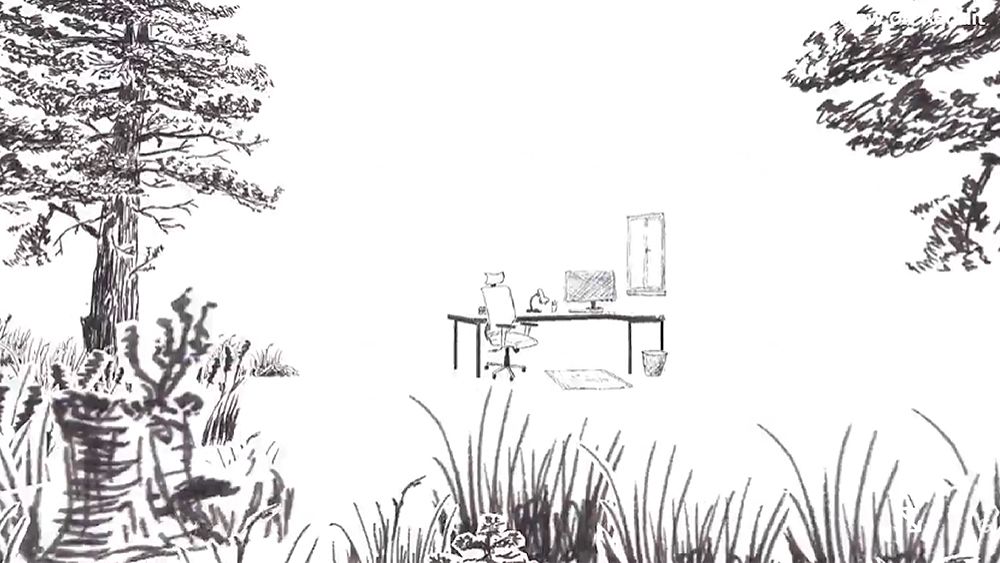
A creative artist has developed an impressive workflow that converts 2D drawings directly into 3D models using Blender, the industry-standard open-source 3D creation suite — and the tool is entirely free to use. The technique bridges the gap between traditional illustration and three-dimensional digital art, opening up 3D creation to artists who are more comfortable working in flat, drawn styles. Blender's flexibility and its robust community of plugin developers have made it a frequent host for this kind of innovative pipeline, consistently lowering the barrier to entry for aspiring 3D artists. The workflow is particularly exciting for concept artists and illustrators who want to explore dimensionality without abandoning their existing sketching habits. It's another example of how free, open-source tools continue to democratize skills that once required expensive software and years of specialized training.

Create Hair Strands Faster With This Free Blender Tool
80.lv · 80.lv ↗
A new free tool for Blender aims to dramatically speed up one of the most notoriously tedious tasks in 3D character creation: generating realistic hair strands. Hair has long been a stumbling block for 3D artists, requiring painstaking manual placement or expensive grooming software to achieve convincing results. This add-on streamlines that process directly within Blender's native environment, keeping artists inside a single application rather than bouncing between tools. The fact that it carries no cost makes it especially valuable for independent artists, students, and small studios working with tight budgets. As Blender's ecosystem of free community-built tools continues to expand, the gap between open-source workflows and commercial pipelines keeps narrowing in meaningful ways.

How to Sculpt & Texture Props and Foliage for a Stylized 3D Scene
80.lv · 80.lv ↗
Artist Sam Ailura has shared an in-depth breakdown of her stylized 3D scene 'Cabin in the Woods,' offering a detailed look at the thoughtful, handcrafted workflow behind the project. Rather than relying on asset libraries, she modeled every prop individually, then tackled stylized sculpting for the very first time — pushing her skills into new territory in pursuit of a cohesive aesthetic. One of the standout challenges was achieving a fluffy, almost plush quality for the trees, which required creative texturing and geometry decisions to sell the deliberately cute, non-realistic look. The project is a strong example of how a clear stylistic vision can guide technical decisions at every stage of a 3D pipeline. Ailura's willingness to document and share her process adds real value for the broader 3D art community, particularly for artists trying to develop their own stylized workflows.
Behind The Scenes: Spiderman VS MechaGodzilla
BlenderNation · blendernation.com ↗
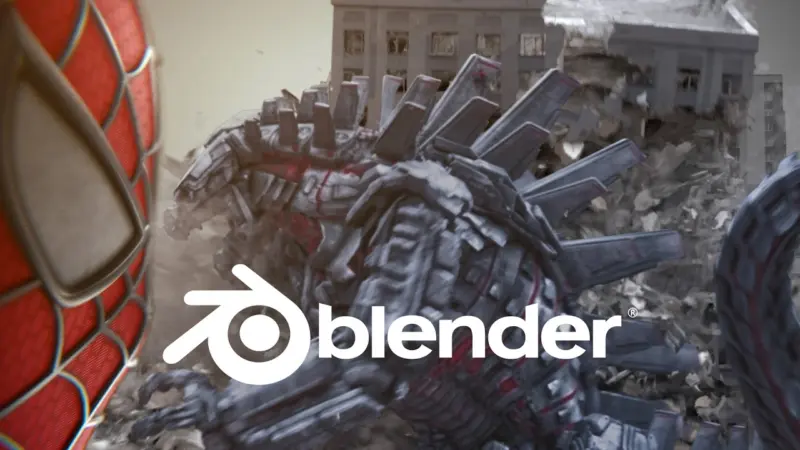
VFX artist Raffo VFX produced an ambitious short film pitting Spider-Man against MechaGodzilla, using a Rokoko motion capture suit to bring the action sequences to life with convincing physicality. The project was assembled entirely in Blender for the 3D work and DaVinci Resolve for editing and compositing, showcasing what a solo or small-team creator can now achieve with accessible, affordable tools. Rokoko's consumer-grade motion capture suits have become increasingly popular among independent filmmakers and animators precisely because they eliminate the need for expensive studio setups while delivering usable results. Behind-the-scenes footage of the production gives viewers a rare look at how mocap data translates into the kinds of dynamic, character-driven action sequences typically associated with big-budget productions. The project is a testament to how dramatically the barrier to professional-looking VFX work has dropped in recent years.
3ds Max 2027.2 released
CGPress · cgpress.org ↗
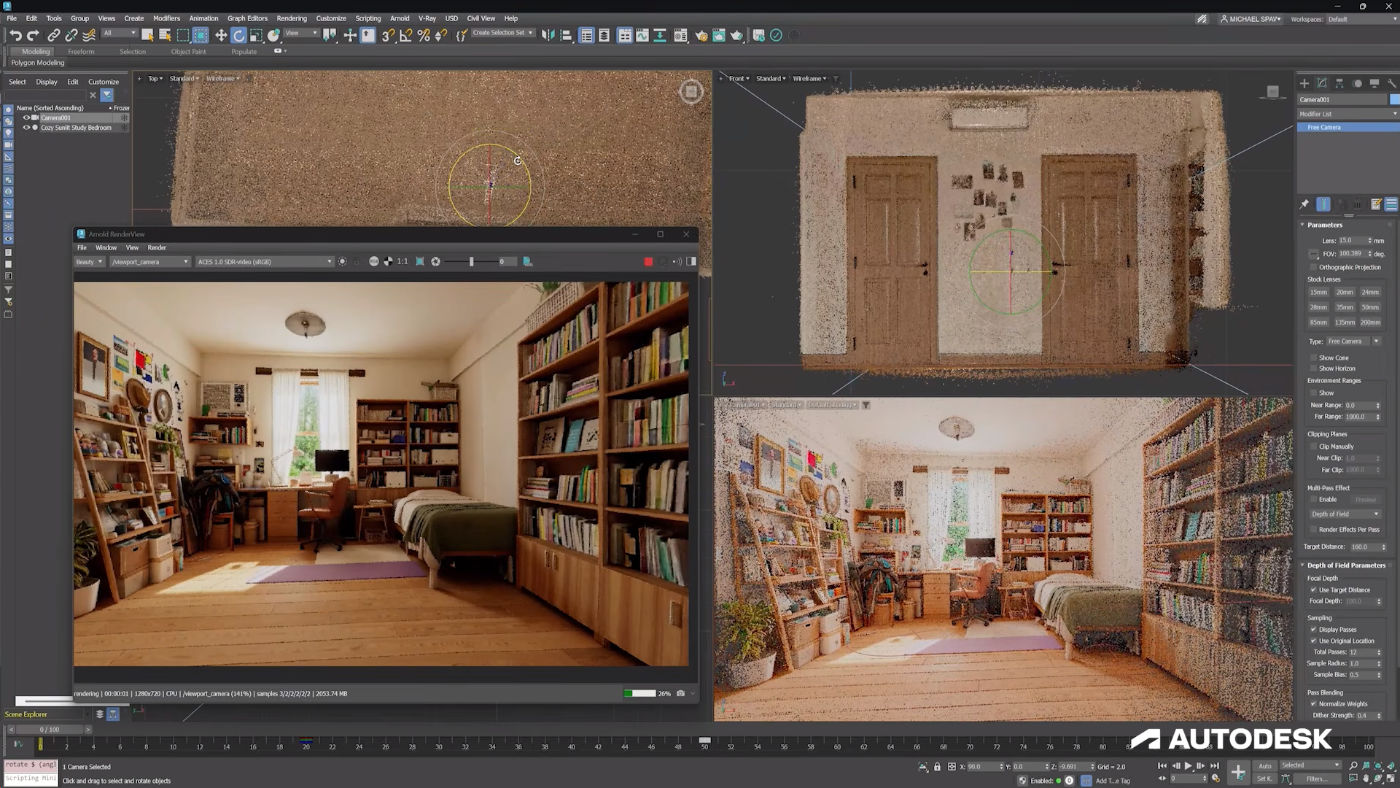
Autodesk has released 3ds Max 2027.2, a substantial update to its long-running professional 3D modeling and rendering application. The headline addition is native support for Gaussian Splatting (3DGS), a cutting-edge scene reconstruction technique that represents real-world environments as clouds of optimized 3D Gaussians rather than traditional polygon meshes. Native integration of 3DGS into a mainstream DCC (digital content creation) tool like 3ds Max marks a meaningful step toward broader industry adoption of the technology, which has previously required specialized viewers or separate software pipelines. For architects, visualization artists, and VFX professionals, the ability to work with Gaussian Splat assets directly inside a familiar application could open up compelling new workflows. The update signals that Autodesk is watching emerging rendering and capture technologies closely and moving to integrate them before they become mainstream demands.

Ultimate 8K Scanned PBR Material Collection For UE5
80.lv · 80.lv ↗
A curated collection of high-resolution, 8K scanned PBR (Physically Based Rendering) materials for Unreal Engine 5 is currently available at a steep 96% discount for a limited time. PBR materials derived from real-world scans are considered the gold standard for achieving photorealistic surfaces in real-time environments, and 8K resolution ensures they hold up even under close inspection or in cinematic rendering contexts. Collections like this typically represent hours of professional scanning, processing, and optimization work, making the discount an unusually strong value proposition for indie developers, archviz artists, and game studios alike. UE5's Nanite and Lumen systems are designed to take full advantage of high-fidelity assets like these, making the timing particularly relevant for studios already deep in next-gen pipelines. Anyone building realistic environments in Unreal would be wise to act before the offer expires.
Those notorious tai chi walking ads show AI is helping scammers, not only in the way we thought
https://www.creativebloq.com/author/joseph-foley · creativebloq.com ↗
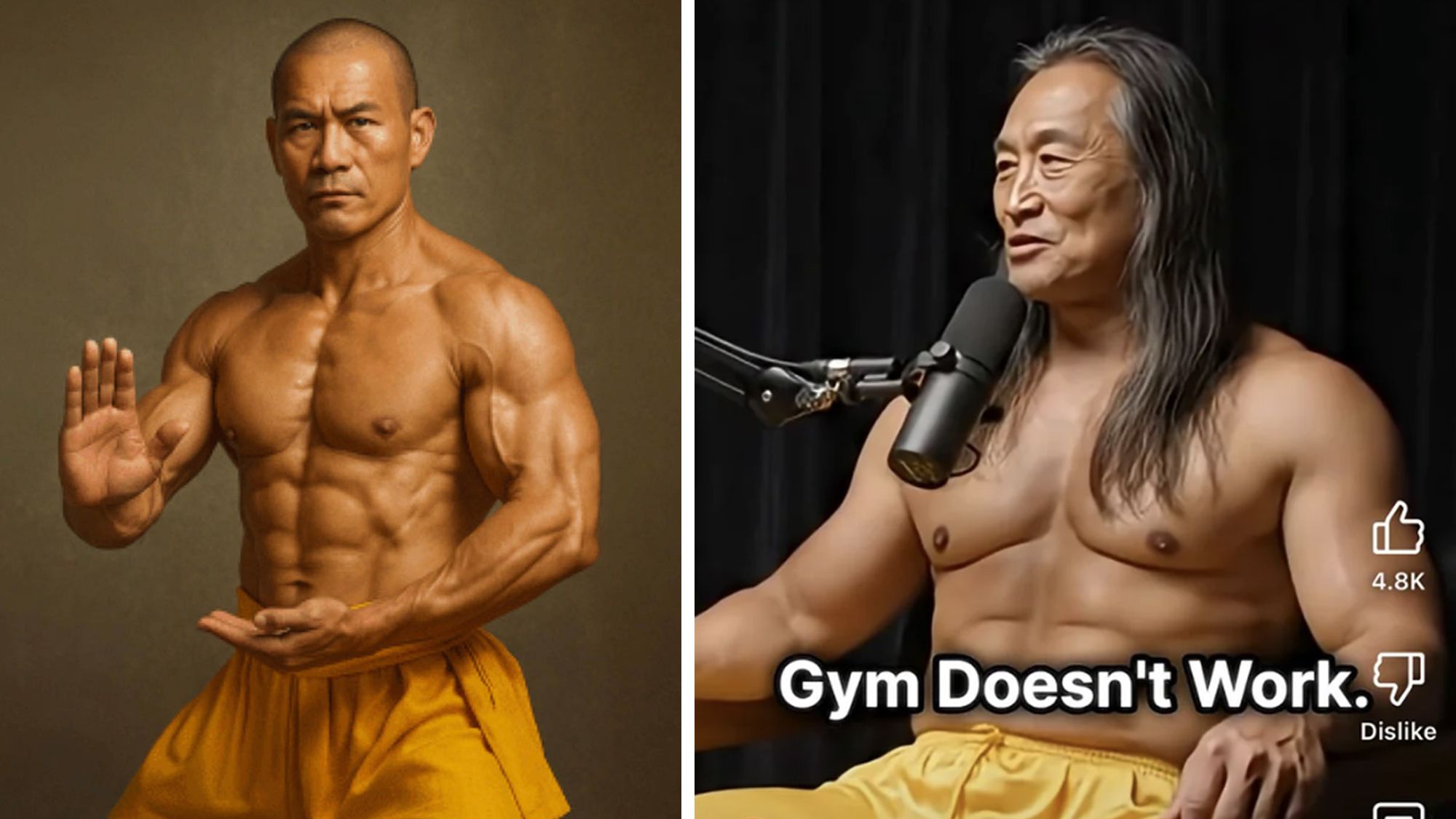
A wave of scam advertisements featuring oddly produced tai chi walking videos has become a case study in how AI is reshaping online fraud — but perhaps not in the most obvious way. Rather than relying on photorealistic deepfakes, the scammers behind these ads are exploiting AI's ability to produce cheap, plausible-enough content at massive scale, flooding platforms with low-quality but functional deceptive material. The insight challenges a common assumption that AI-enabled scams are primarily a deepfake problem requiring hyperrealistic video; in practice, volume and velocity may matter more than visual fidelity. Platforms and regulators focused on detecting photorealistic synthetic media may be missing the larger threat: an industrial-scale churn of imperfect but convincing-enough content designed to slip through moderation nets. The tai chi ads serve as a reminder that the most dangerous AI applications in fraud aren't necessarily the most technically impressive ones.
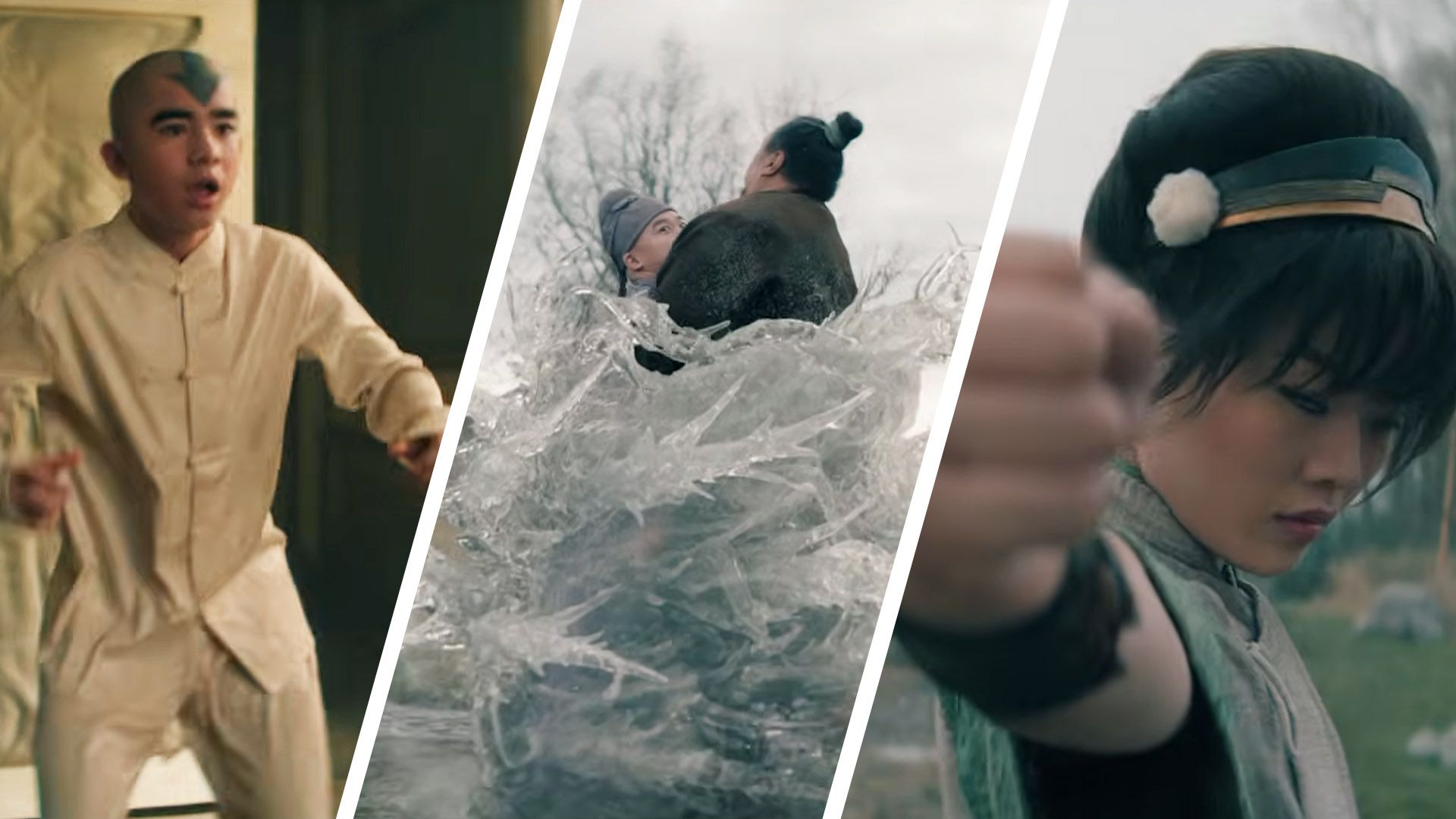
How Avatar: The Last Airbender made water, earth and air appear to bend
https://www.creativebloq.com/author/joseph-foley · creativebloq.com ↗
A behind-the-scenes look at the visual effects work on 'Avatar: The Last Airbender' reveals the extraordinary technical and artistic craft required to bring the show's signature elemental bending to life. Water, earth, fire, and air each demanded distinct simulation approaches, with artists working to ensure that each element felt physically grounded while still matching the stylized, fluid aesthetic of the original animated series. The challenge was particularly acute for air, which is inherently invisible and required creative use of particle systems, environmental disturbance, and secondary motion to convey force and intention without a visible medium. Water and earth bending, meanwhile, leaned heavily on fluid and rigid-body simulations tuned to feel both spectacular and emotionally expressive rather than merely realistic. The breakdown is a fascinating window into how VFX teams translate beloved animated iconography into live-action without losing the kinetic magic that made the original so compelling.