
The Arden Digest — Sep 24, 2026
A curated digest.
Tripo now generates native quad meshes
CGPress · cgpress.org ↗
Tripo has launched P2.0, a significant new version of its AI-powered 3D generation model, with a headline feature that sets it apart from most competitors: the ability to produce native quad meshes rather than the dense, irregular triangle meshes typical of AI-generated geometry. Quad-dominant topology is the long-standing standard in professional 3D pipelines because it deforms cleanly during animation, subdivides predictably, and plays nicely with tools like ZBrush and standard UV unwrapping workflows. For artists and studios, this means AI-generated assets could move closer to being production-ready rather than requiring extensive cleanup before use. The release marks a meaningful step in bridging the gap between generative AI speed and the quality bar demanded by games, VFX, and animation pipelines.

Designing a Functional-Looking Spy Drone with an Insect-Like Form
80.lv · 80.lv ↗
Designer Sandro Bonfanti has shared a detailed breakdown of the B.E.E., a concept spy drone designed to blend mechanical functionality with the unsettling silhouette of an insect. Bonfanti approached the project in deliberate stages — establishing a convincing functional logic first, then refining the overall form, ensuring the final design reads as both plausible and visually striking. For texturing, he leaned on Blender's Box projection method, which allowed him to apply textures efficiently across complex, non-planar surfaces without labor-intensive UV unwrapping. He also staged the final renders as polished product shots rather than raw model previews, adding lighting, context, and composition choices that make the drone feel like a real piece of industrial hardware pulled from a classified catalogue.

How to Create a Hard-Surface Philips Radio with ZBrush & Substance 3D
80.lv · 80.lv ↗
Artist Ravikanth Gupta has shared an in-depth look at how he recreated a vintage Philips radio as a highly detailed 3D asset, bringing together ZBrush and Substance 3D Painter in a thoughtful, research-driven workflow. Rather than working from photographs alone, Gupta studied a repair video of the actual radio to understand how it had aged and worn over time — giving him authentic reference for scratches, paint loss, and material degradation. The organic surface details and subtle imperfections were sculpted directly in ZBrush, while the asset's complexity was managed across six UV sheets using UDIMs, a tiling system that allows high-resolution texturing across multiple sections of a single mesh. The result is a meticulous recreation that captures not just the look of the object but the texture of its history.
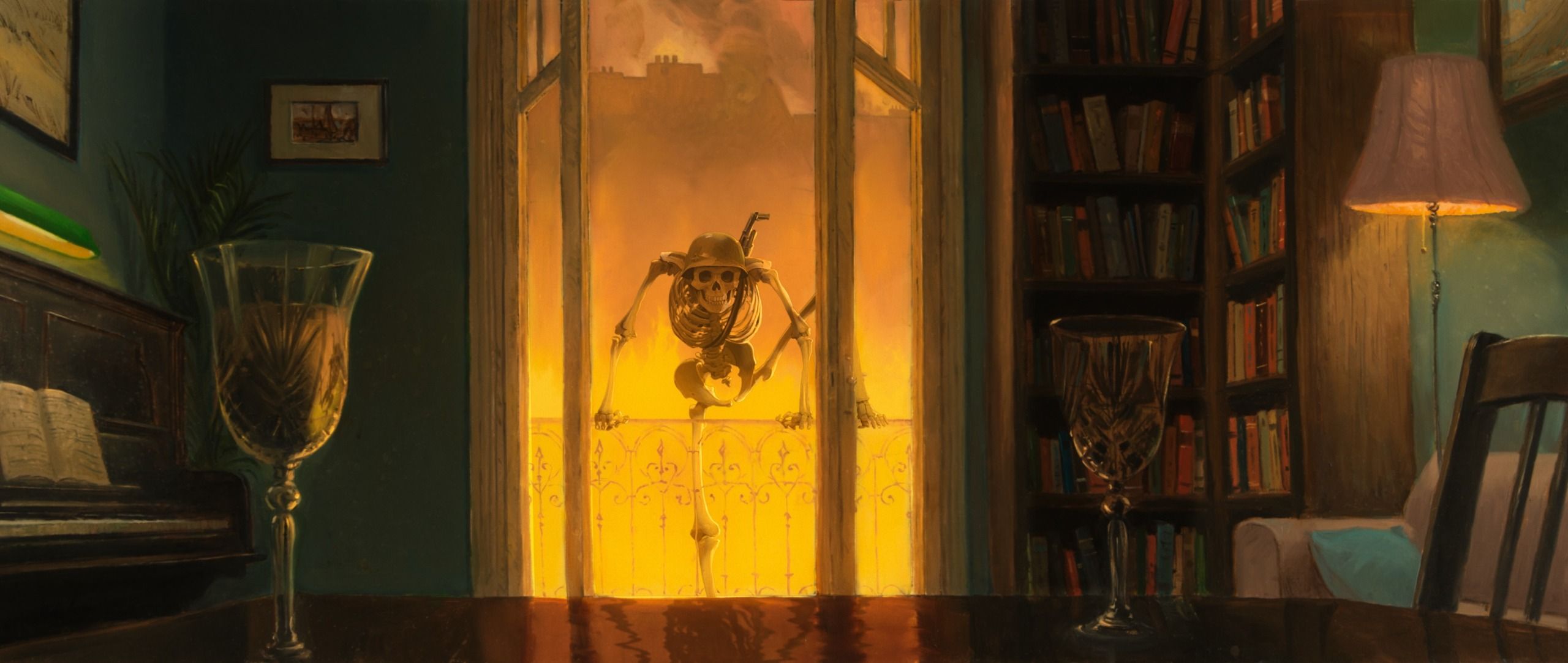
How Fusion Studio and expert compositing skills brought the striking animation Danse Macabre to life
Creative Bloq · creativebloq.com ↗
Compositing Technical Director Stijn Calis has offered a behind-the-scenes look at how Blackmagic Design's Fusion Studio was used to bring the animated short Danse Macabre to life, handling everything from background development to the finest finishing details. The film, whose title references the medieval artistic theme of death as a great equalizer, required a compositing pipeline capable of unifying varied visual elements into a cohesive and atmospheric whole. Calis walks through his node-based workflow in Fusion, explaining how layering, color work, and technical compositing choices contributed to the animation's striking final look. The breakdown is a useful case study in how a skilled compositor's work, often invisible to audiences, can be the defining factor in an animation's visual impact.

Your Sci-Fi Turret Looks Great. Until It Rotates from Under the Floor <span class="title-badge title-badge--paid" title="Paid"><svg xmlns="http://www.w3.org/2000/svg" viewBox="0 0 24 24" fill="currentColor" width="17" height="17" aria-hidden="true"><path d="M11 2a9 9 0 1 0 0 18A9 9 0 0 0 11 2zm1 14.93V18h-2v-1.07A4 4 0 0 1 7 13h2a2 2 0 0 0 2 2h1a1 1 0 0 0 0-2h-1a4 4 0 0 1 0-8V4h2v1.07A4 4 0 0 1 15 9h-2a2 2 0 0 0-2-2h-1a1 1 0 0 0 0 2h1a4 4 0 0 1 1 7.93z"/></svg></span>
BlenderNation · blendernation.com ↗
A new course from 3D Tudor's Neil bridges the full pipeline from Blender 5.2 to Unreal Engine 5.8, centered on building a stylized sci-fi turret as a complete, playable in-engine project. The course tackles a problem every game artist eventually runs into: assets that look great in a modeling viewport but break down the moment real-time logic is applied — like a turret whose rotation pivot sits in the wrong place, causing it to spin from beneath the floor rather than from its base. Students work through hard-surface modeling with stylized aesthetics, bake masks to carry detail efficiently into the real-time asset, and wire up Blueprint controls so the turret actually functions as intended in UE5. The project-based structure means learners leave with both a finished asset and a transferable understanding of the Blender-to-Unreal handoff.

Exode (short film made with Blender)
BlenderNation · blendernation.com ↗
Filmmaker Wixie Man has released the complete version of Exode, a science fiction short film created using Blender, following earlier coverage of the project on BlenderNation during its production. The film joins a growing body of work demonstrating that Blender's rendering and animation capabilities, once considered the domain of hobbyists, can support genuinely cinematic short-form storytelling. Sci-fi as a genre is a natural proving ground for Blender artists given the software's strength in hard-surface modeling, procedural materials, and dramatic lighting — tools that translate well to spacecraft, dystopian environments, and futuristic technology. Exode offers audiences a chance to see what a dedicated independent filmmaker can achieve with open-source tools and creative ambition alone.
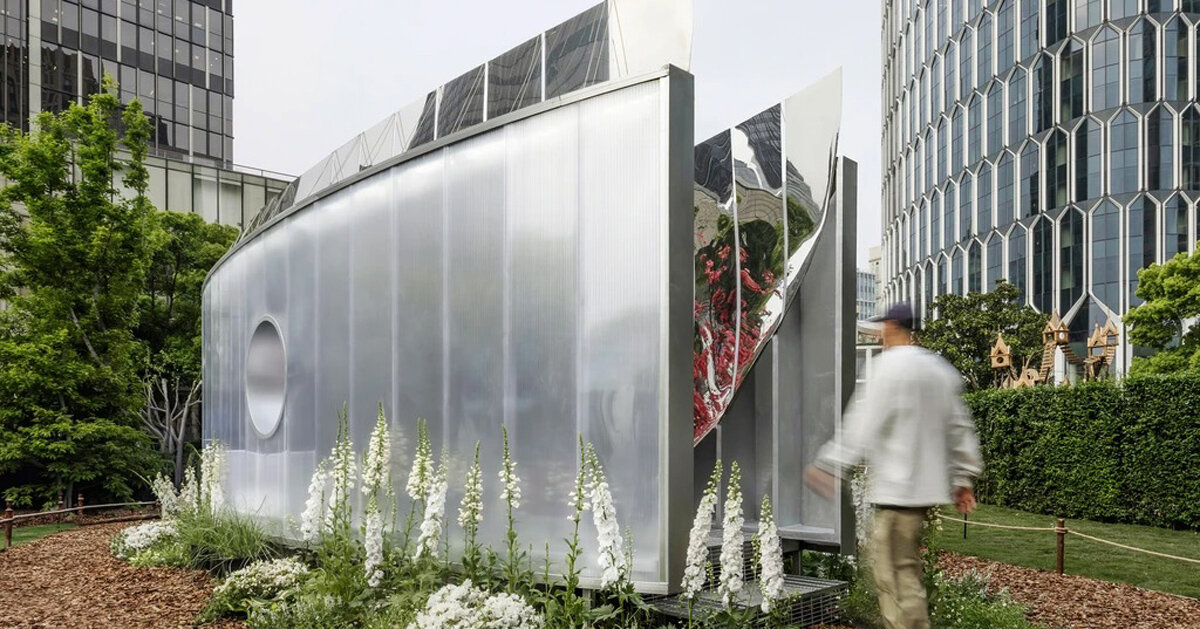
curved mirrored steel walls multiply one tree into forest at infinite grove pavilion in shanghai
Hao Chang · designboom.com ↗
A pavilion called Infinite Grove, installed in Shanghai, uses curved mirrored steel walls to transform a single real tree into the illusion of an endless forest, playing with perception, reflection, and the boundary between nature and artifice. The installation exploits the geometry of curved mirrors to multiply and distort reflections in ways that flat mirrors cannot, creating a shifting, immersive environment that changes as visitors move through it. It sits within a broader contemporary tradition of reflective architectural installations — from Anish Kapoor's large-scale mirror works to infinity-room experiences — but grounds itself specifically in a dialogue between urban space and natural form. The effect collapses the distinction between the singular and the infinite, inviting visitors to reconsider how much of what they perceive as abundance might be the elegant repetition of something simple.
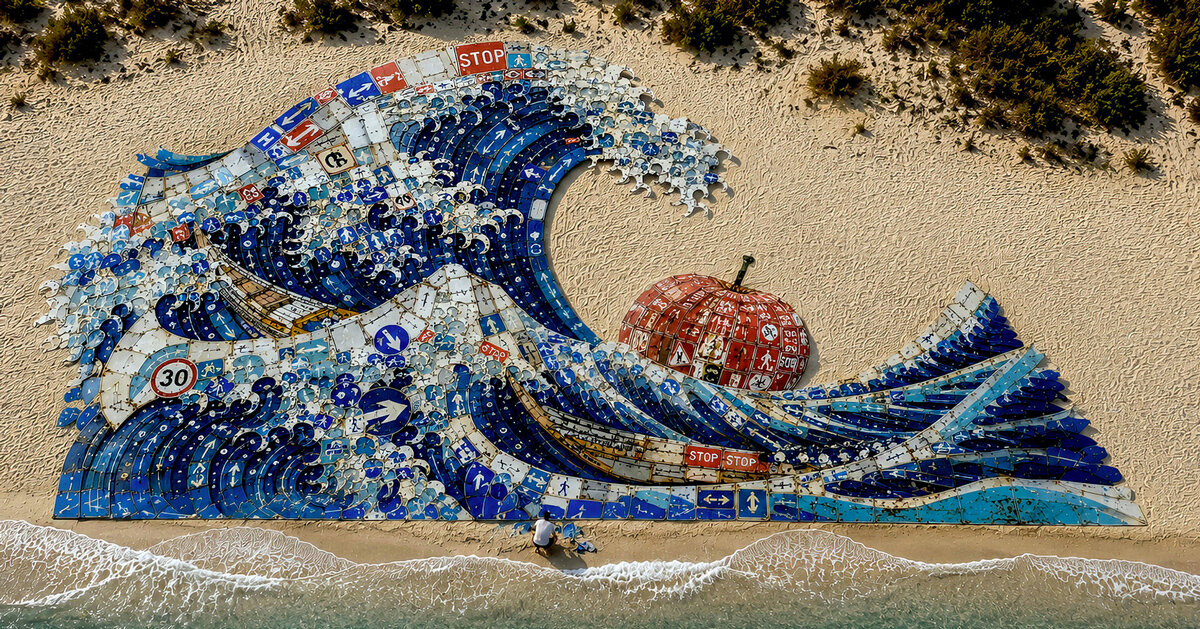
discarded road signs transform into monumental land art installation on sardinian shore
Scoobafish · designboom.com ↗
On the shores of Sardinia, an artist has assembled discarded road signs into a monumental land art installation, turning the detritus of infrastructure into a large-scale work rooted in the specific landscape and coastline where it stands. Road signs carry an inherent visual language — colors, symbols, and commands designed for instant legibility — and recontextualizing them as sculpture scrambles that readability, inviting viewers to see familiar objects as pure form, color, and material. The choice of found, discarded objects connects the work to a long tradition of land art and assemblage that interrogates waste, memory, and the human imprint on natural environments. Set against Sardinia's rugged coastal scenery, the installation creates a pointed contrast between the bureaucratic uniformity of road signage and the wild, ancient character of the Mediterranean shoreline.