
The Arden Digest — Aug 27, 2026
A curated digest.
yayoi kusama, japanese artist who found infinity in a single dot, dies at 97
thomai tsimpou I designboom · designboom.com ↗
Yayoi Kusama, the visionary Japanese artist whose obsessive, dot-covered canvases and mirrored infinity rooms made her one of the most recognizable — and beloved — artists of the 20th and 21st centuries, has died at the age of 97. Born in 1929 in Matsumoto, Japan, Kusama began drawing hallucinatory patterns as a child as a way of coping with anxiety and mental illness, a practice she would later describe as art saving her life. Her decades-long career spanned painting, sculpture, installation, fashion, and literature, and she lived voluntarily in a psychiatric institution in Tokyo from 1977 while continuing to work prolifically from her nearby studio. Her Infinity Mirror Rooms became cultural phenomena, drawing record-breaking crowds and waitlists at museums worldwide, introducing her radical vision to entirely new generations. Kusama's work — rooted in repetition, the infinite, and the dissolution of the self — ultimately transcended art world categories to become a genuine pop-cultural touchstone.
Spline v2 brings AI agents, WebGPU support and MCP server
CGPress · cgpress.org ↗
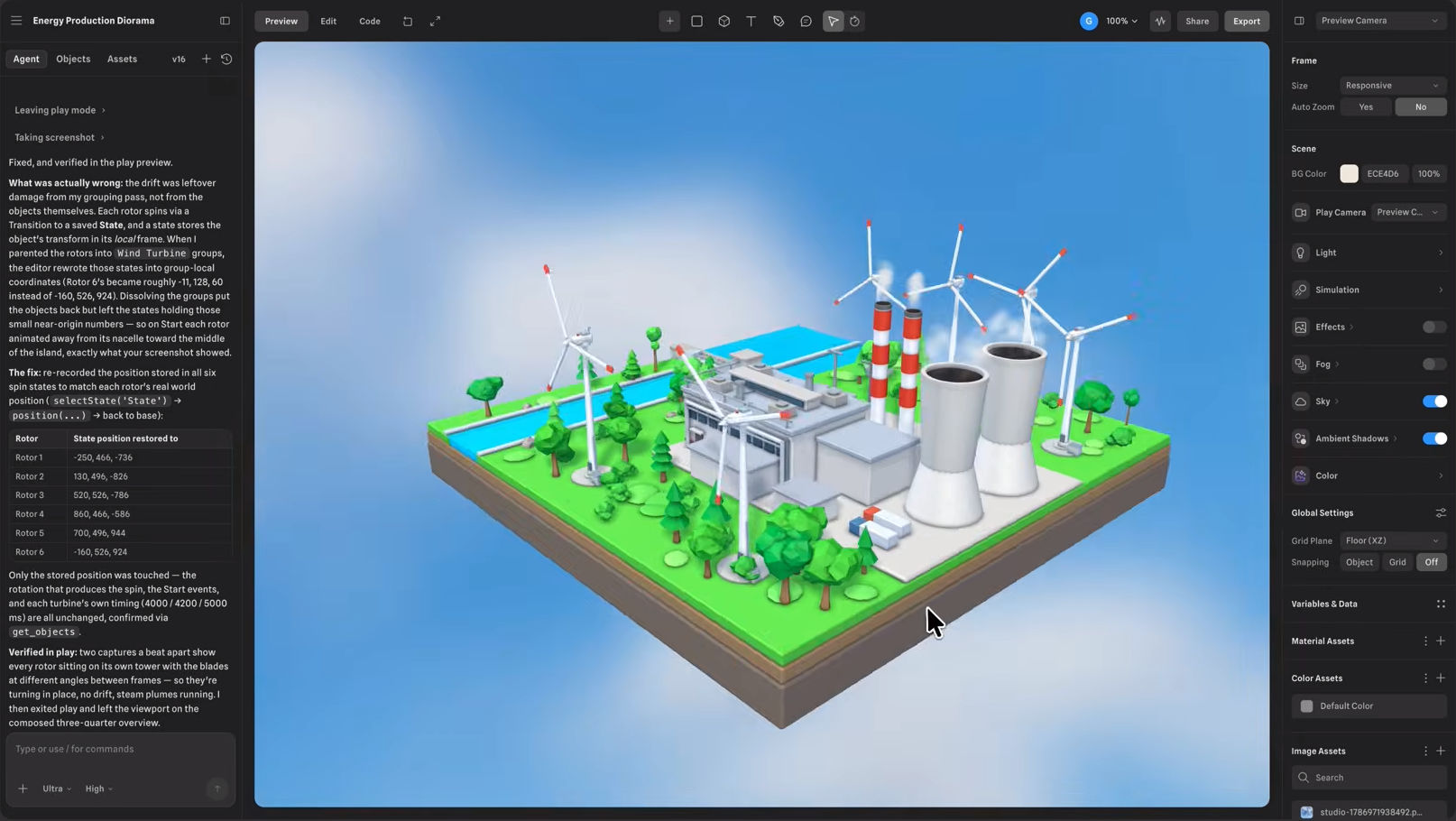
Spline, the browser-based 3D design tool popular among UI/UX designers and developers, has launched version 2 with a substantial set of new capabilities aimed at making interactive 3D creation faster and more connected to modern workflows. The headline addition is an AI agent mode, which allows users to generate and manipulate 3D scenes through natural language prompts, lowering the barrier for those without deep 3D modeling experience. Spline v2 also introduces support for WebGPU, the next-generation graphics API for the web, which promises significantly better rendering performance and visual fidelity in browser-based scenes. A new Spline MCP (Model Context Protocol) server rounds out the release, enabling tighter integration with AI tools and external pipelines — a sign that Spline is positioning itself squarely within the emerging ecosystem of AI-native creative software. Together, these updates suggest Spline is evolving from a niche design utility into a more ambitious platform for real-time 3D on the web.

The Masters of the Universe AI art controversy shows Spider-Man: Brand New Day was just the tip of the iceberg
Creative Bloq · creativebloq.com ↗
The recent controversy surrounding AI-generated art in the Masters of the Universe franchise has reignited a broader industry debate, with artists arguing it is far from an isolated incident — and that the Spider-Man: Brand New Day controversy was merely an early warning sign of a much larger problem. In both cases, published commercial work appeared to contain imagery consistent with AI generation, raising questions about whether studios and publishers are quietly substituting human illustrators with AI tools to cut costs. The backlash from working artists has been fierce, with many pointing out that such decisions devalue skilled creative labor and often go unacknowledged by the companies involved. Critics argue that the entertainment and comics industries lack clear disclosure standards, making it difficult for consumers or collaborators to even identify when AI has been used. For many in the illustration community, these controversies are symptoms of a systemic shift that, without intervention, threatens to fundamentally restructure how commercial art is commissioned and produced.

OpenAI's first custom chip "Jalapeño" reportedly beats Nvidia's Blackwell and Rubin in inference benchmarks
Matthias Bastian · the-decoder.com ↗
OpenAI has publicly unveiled its first custom in-house silicon, an inference chip internally codenamed "Jalapeño," presenting benchmark results at the prestigious Hot Chips semiconductor conference. The chip's performance has drawn significant attention: independent testing by SemiAnalysis reportedly shows Jalapeño outperforming Nvidia's current Blackwell architecture — and even the next-generation Rubin chips — on both throughput and energy efficiency metrics. SemiAnalysis CEO Dylan Patel underscored just how unusual this is, noting that first-generation custom chips almost never beat established, mature silicon from incumbents like Nvidia. For OpenAI, developing its own inference hardware is a strategic move to reduce its enormous dependency on Nvidia GPUs and control the cost and speed of serving its AI models at scale. If the benchmarks hold up to broader scrutiny, Jalapeño could mark a genuine inflection point — not just for OpenAI's economics, but for the competitive dynamics of the AI chip market as a whole.
These nightmarish REAL restaurant menus show that AI is killing folk graphic design
Creative Bloq · creativebloq.com ↗
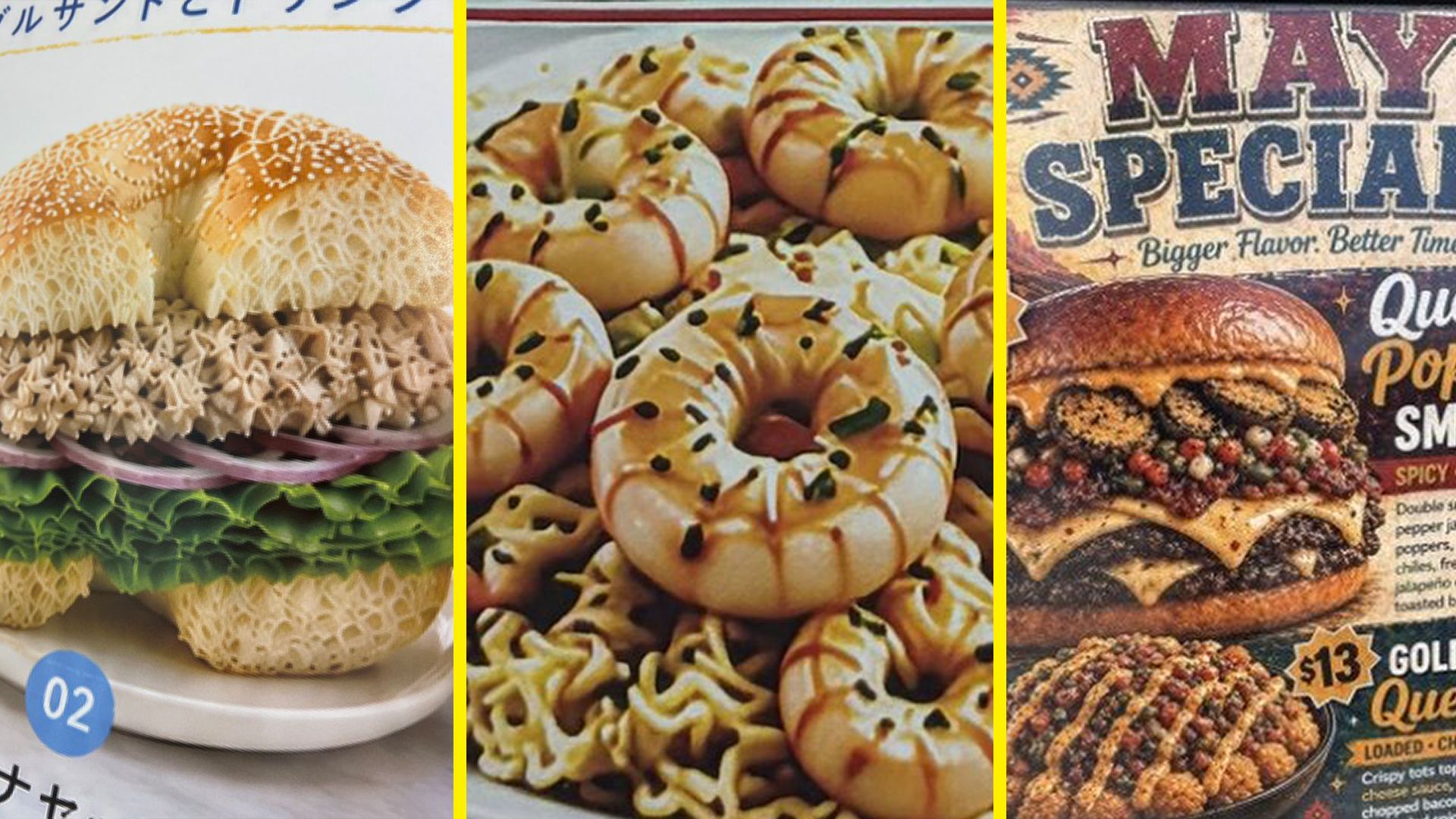
A growing trend of AI-generated restaurant menus is quietly eroding one of the most charming corners of everyday visual culture: the hand-crafted, idiosyncratic graphic design that has long given local eateries their personality and character. From hand-lettered chalkboards to photocopied laminated specials, folk restaurant design has historically been a living record of local aesthetics, immigrant visual traditions, and small-business ingenuity — none of which AI tools are particularly good at replicating authentically. What AI tends to produce instead is an uncanny, homogenized aesthetic: images where food looks simultaneously hyper-appetizing and deeply wrong, and layouts that feel polished but somehow hollow. The piece serves as a cautionary visual tour through real-world examples, illustrating how cost-cutting adoption of generative AI in small business contexts can produce results that are, at best, off-putting and, at worst, actively harmful to a restaurant's brand. The broader implication is that as AI lowers the cost of "good enough" design, the rich vernacular traditions it replaces may quietly disappear without most people noticing until they're already gone.

Behind the Scenes: Stormy Weather
BlenderNation · blendernation.com ↗
Studio Sozap has shared an in-depth behind-the-scenes breakdown of their short film "Stormy Weather," offering a candid and refreshingly honest account of how the project evolved from its original concept. The film began with the ambitious intention of putting a hurricane at the center of the narrative, using the storm as both spectacle and storytelling engine. However, as Sozap explains, the production took on a life of its own — with the team frequently side-tracking into character moments, mood, and atmosphere that pulled focus away from the meteorological centerpiece. This kind of creative drift, while sometimes a risk, can also be the mark of a project finding its true emotional core during production. The breakdown walks through the various stages of development, offering insight into the decision-making, artistic pivots, and technical work that shaped the final piece — making it a valuable case study for animators and filmmakers interested in short-form storytelling.
Sherpa AI rendering
CGPress · cgpress.org ↗
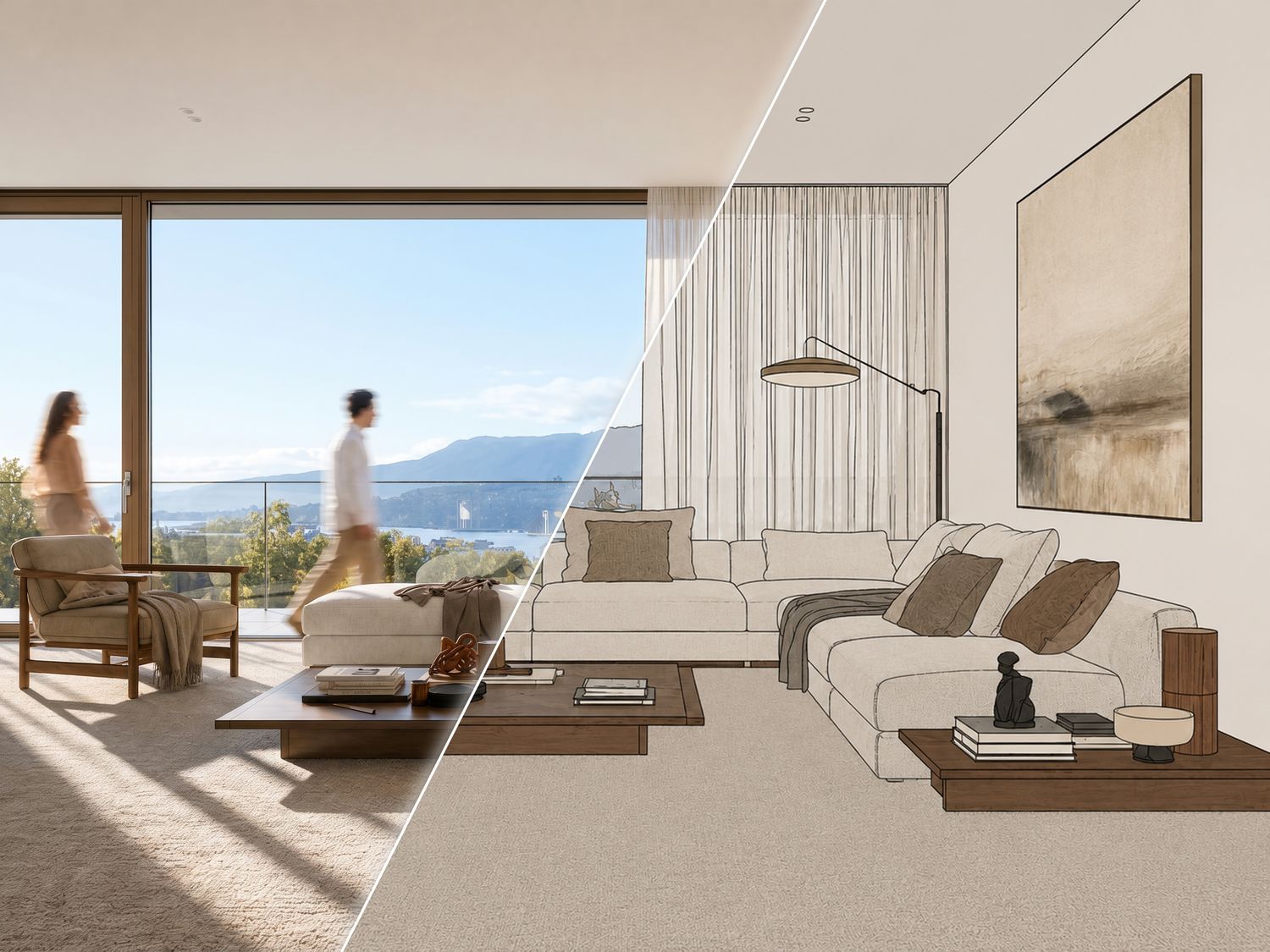
Sherpa is a newly emerging AI-powered rendering tool designed specifically for architects and interior designers, targeting the often tedious gap between a rough work-in-progress render and a polished, client-ready visualization. Unlike general-purpose image generation tools, Sherpa is built to work directly from existing outputs — whether that's a preliminary render or a SketchUp model — preserving the spatial logic and proportions of the original design rather than hallucinating new geometry. This makes it particularly practical for professional workflows, where maintaining accurate representation of a space is non-negotiable. By automating much of the time-consuming texturing, lighting enhancement, and material refinement process, Sherpa could meaningfully compress the visualization pipeline for small studios and solo practitioners. The tool sits within a rapidly growing category of domain-specific AI applications aimed at creative professionals, where the value proposition is workflow acceleration rather than wholesale replacement of human design judgment.

Ziva VFX-Inspired Physics-Based Muscle Simulation System
80.lv · 80.lv ↗
Technical artist Shirzad Bahrami is developing his own physics-based muscle simulation system, drawing inspiration from Ziva VFX — the industry-leading (and now largely inaccessible) muscle simulation technology that was acquired by Unity and subsequently pulled from the market in 2023. Ziva's disappearance left a significant gap in the VFX and game development pipeline, as its approach to anatomically realistic creature and character simulation had become a benchmark for high-end production work. Bahrami's project represents part of a broader community response to that vacuum, with independent developers and researchers working to reconstruct or reimagine similar capabilities outside of locked corporate ecosystems. Physics-based muscle simulation is technically demanding, requiring sophisticated handling of volume preservation, tissue dynamics, and interaction between skeletal, muscle, and skin layers. If successful, tools like Bahrami's could help democratize high-fidelity character simulation for studios and artists who lack access to enterprise-level solutions.